
Coffee Origins
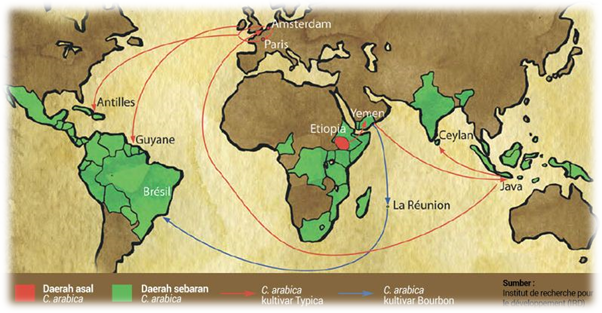
There, legend says the goat herder Kaldi first discovered the potential of these beloved beans. The story goes that that
Kaldi discovered coffee after he noticed that after eating the berries from a certain tree, his goats became so energetic that they did not want to sleep at night.
Kaldi reported his findings to the abbot of the local
monastery, who made a drink with the berries and
found that it kept him alert through the long hours
of evening prayer. The abbot shared his discovery
with the other monks at the monastery, and
knowledge of the energizing berries began to spread.
As word moved east and coffee reached the Arabian
Peninsula, it began a journey which would bring
these beans across the globe.
Coffee comes from around the world
Coffee plants are now cultivated in over 70 countries, primarily in the equatorial regions of the Americas, Southeast
Asia, the Indian subcontinent, and Africa. Subsequently green beans are imported from all over the world as South
Africa’s climate is not suitable for large-scale coffee farming. However, we do have a very strong, highly skilled and
intriguing roasting culture.
Coffee comes from around the world
Coffee plants are now cultivated in over 70 countries, primarily in the equatorial regions of the Americas, Southeast
Asia, the Indian subcontinent, and Africa. Subsequently green beans are imported from all over the world as South
Africa’s climate is not suitable for large-scale coffee farming. However, we do have a very strong, highly skilled and
intriguing roasting culture.
Coffee roasting
Coffee beans are seeds matured in coffee cherry. They are then processed and dried to coffee beans. Before roasting,
coffee beans are green in colour and have a beany and grassy aroma. Actually, green coffee beans do not smell like
coffee at all. When we roast coffee, we develop 800 to 1000 different aroma compounds. These compounds make
the flavour of the coffee. With roast profiling, we can affect the existence of these aroma compounds in coffee and also
determine the flavour of the coffee.
Taking raw green coffee beans and turning them into delectable roasted Coffee is truly an art form.
If you’ve ever seen a coffee roaster in action, you know that it’s not a tame, simple process. It’s complex, requires precise equipment, and includes a lot of science. There are no assembly lines, no factory< equipment. Coffee roasters are craftsmen and scientists who want to do right by their farmers, customers, and coffee.

Coffee Brewing
Coffee brewing machines and brewing equipment come in many forms, models, and designs that have continued to
evolve over time, particularly in regards to the specialty coffee /premium gourmet coffee industry which is always in
search of a better cup of coffee and more convenience in producing it. The top ways to make coffee are:
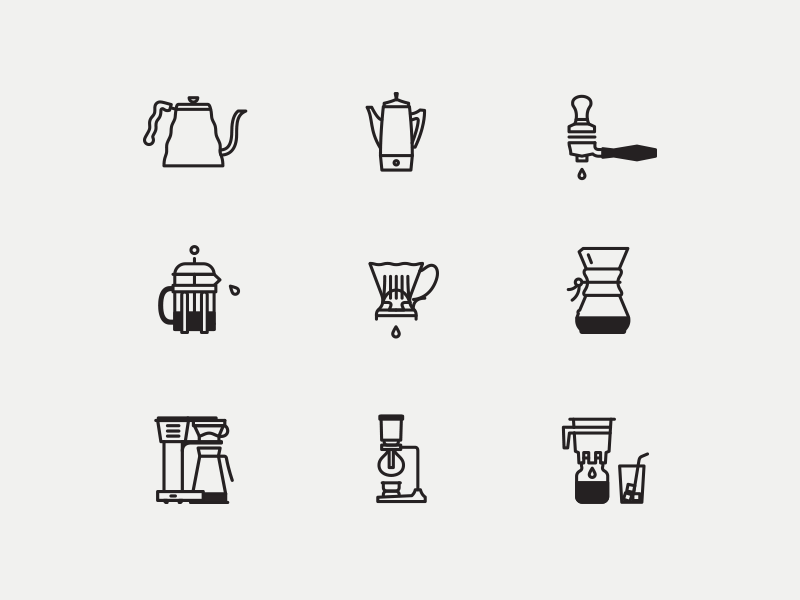
Coffee Brewing
Pour Over
Moka Pot
Espresso Machine
French Press
Drip Filter Coffee
Chemex
Automatic Drip Coffee Maker
Siphon Vacuum Brewer
Cold Brew Coffee
Aeropress
Coffee Storage
the fine flavour sand aromas of the freshly roasted coffee from degrading due to exposure to light and air. Ideally, you want to store your coffee in a 1-way valve seal container. If you have opened the coffee bag already, the worst place is the freezer because the coffee beans will absorb moisture. Unopened coffee bags with a 1-way valve seal may be stored in the freezer, and this can actually extend the freshness.
How to grind coffee
Many prefer to grind and brew their own whole bean coffees. The best choice among coffee grinders, in regard to preserving the coffee beans’ flavours and aromas, is a conical burr grinder. The worst type of grinder to use is a blade grinder because they generate too much eat and can actually re-roast the coffee beans. Only grind what you are going to use at the time because once the coffee has been ground it will lose its fine flavours and aromas very rapidly.
The most important point is to use the correct grind for your coffee maker. Avoid using too fine of a grind because it can break up the coffee bean fibres to much as it can cause the aromatic oils of the coffee to be over-exposed to oxygen and result in a distinct bitterness. Grinding too coarse will result in under extracted coffee, as the water will pass through too quickly.